Tiling6 min read
Epoxy grout or cement grout: which goes where
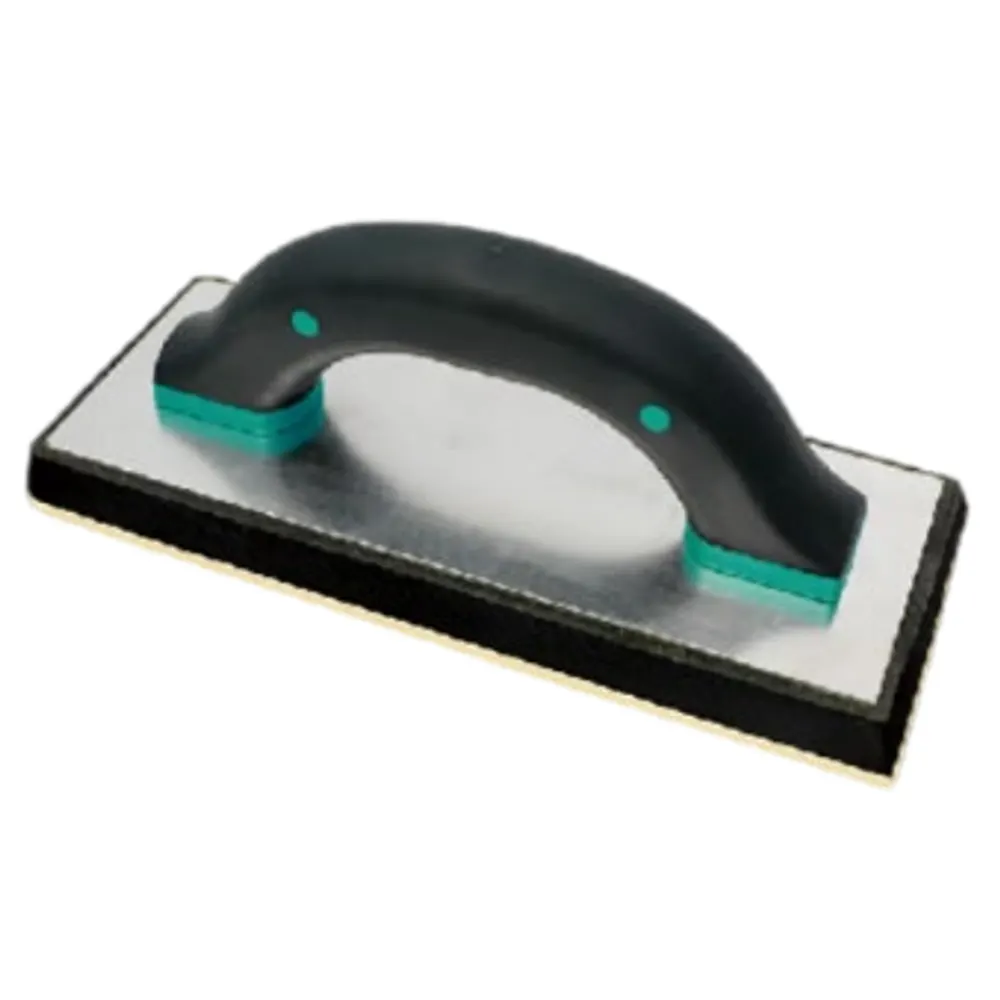
Use cement grout for most tiled floors and walls, where acid and chemicals are not a concern. Use epoxy grout where acid, hygiene rules, salt water or thermal water ask more of the joint: food plants, commercial kitchens, worktops and salt-water pools. On the figures for Keracolor FF and Kerapoxy, cement grout gives more working time and a wider temperature window; epoxy resists far more but is harder to lay and clean.
In this guide
What is the difference between epoxy grout and cement grout?
Cement grout is a powder mixed with water on site; epoxy grout is a two-part resin with no water in it. Most of the differences on a job follow from that.
Keracolor FF blends cement, fine aggregates, polymers and pigments. Mapei classes it CG2WA: an improved cementitious grout with reduced water absorption and high abrasion resistance. Measure the water. Too much can leave a whitish bloom on the surface and shift the colour.
Kerapoxy is an epoxy resin with silica sand, classed RG, a reaction resin grout. It comes as a drum of component A and a bottle of hardener, already proportioned. No water or solvent goes in, however stiff it feels. It resists acids and sets very hard, but it leaves you much less time.
Epoxy grout and cement grout side by side
Cement grout gives you more time and more tolerance; epoxy grout gives you more resistance. Quantity does not separate them: both tables print 0.3 kg/m² on 600x600x10 tile at a 5 mm joint, and each product page has the data sheet and a coverage calculator.
Cleaning is what catches people out, because the two want opposite things. Keracolor FF waits until it turns matt, then gets sponged diagonally across the joints. Too early and the grout drags out of the joint; too late and you are scrubbing mechanically, which can scratch the tile.
Kerapoxy is cleaned straight away. Wet the surface, emulsify the residue with an abrasive pad, then sponge it off, rinsing often. The sheet warns that any trace left on the tile "will be very difficult to remove".
| Keracolor FF (cement) | Kerapoxy (epoxy) | |
|---|---|---|
| Class | CG2WA | RG |
| Joint width | Up to 6 mm | At least 1 mm |
| Pot life | Approx. 2 hours | 45 minutes |
| Application temperature | +5°C to +40°C | +12°C to +30°C |
| Acids | Good if pH above 3 | Acid-resistant |
| Cleaning | After 10 to 20 minutes | Immediately |
| Light foot traffic | 24 hours | 24 hours |
| Ready for use | 3 days | 4 days; 10 for chemical attack |
| Pools can fill after | 7 days | 10 days |
| Temperature in use | -30°C to +80°C | -20°C to +100°C |
| Stocked | 5 kg, grey | 5 kg, grey and white |
Which grout for a home kitchen or bathroom?
Cement grout suits most home bathrooms and kitchen floors and walls; keep epoxy for worktops. Keracolor FF is listed for interior floor and wall tiles and for smooth, glazed and polished surfaces, and its water-repellent additives make it less prone to picking up dirt.
Kerapoxy's sheet names kitchen work surfaces. Before choosing it, look at the tile. The sheet rules it out for terracotta, and asks for a sample test on porcelain in a contrasting colour, such as white grout on a dark tile, and on porous or rough surfaces.
Grout does not keep water out of the building. In a shower, that job belongs to a membrane such as Mapelastic Easy under the tile. For routine cleaning of the tiles, use a neutral product such as UltraCare Multicleaner, always diluted.
Which grout for pools, commercial kitchens and food plants?
Food plants take epoxy, and so, on our reading, should commercial kitchens; pools can take either, depending on the water. Kerapoxy's sheet names dairies, abattoirs, breweries, butchers and fish vendors, and allows work that complies with the HACCP food hygiene system. It does not name restaurant kitchens, but the demands are of the same kind. Keracolor FF is listed for industrial floors only "where resistance to chemical agents is not required".
For oleic acid, as in oil mills and sausage plants, the sheet points to a different Mapei product, so ask us first.
Both grouts are listed for pools. Kerapoxy is "particularly suitable for basins containing salt or thermal water", the case to weigh at a coastal hotel. Read the adhesive's sheet too: Keraflex Maxi S1 asks for 21 days before filling. On our reading of the sheets, the longer wait decides.
Which grout for facades and terraces?
Cement grout is usually the practical choice in strong sun, because its temperature range is far wider. Both sheets allow exterior work, and Kerapoxy's colours are stated to resist ultraviolet rays and weather, so epoxy remains an option if the terrace also faces chemicals.
Keracolor FF needs care on a hot, windy terrace. Wet the joints first if the tile is very porous, and again after several hours, since the sheet says wet curing always improves performance. Saline or dirty water is banned from the mix, so bring clean water if the site supply is brackish. A damp screed can push a white bloom through the joints, so let it dry first.
For facades, the sheet says a resin additive in place of water improves performance under harsh conditions. That additive is not on our stock list, so ask us before planning around it. Membranes for the terrace are in the waterproofing line.
Neither grout is a movement joint. Both sheets send expansion and movement joints to a flexible Mapei sealant.
Can epoxy grout be applied in Dar es Salaam heat?
Yes, but only inside its printed limit, and that limit is tight. The Kerapoxy sheet says: "Use the product in temperatures between +12°C and +30°C". Dar es Salaam's mean daily maximum is 31.2°C across the year: above 30°C in ten months, 30.0°C in June and 29.7°C in July. Those are airport weather station figures, and a tile floor in direct sun can run hotter.
The sheet gives no hot-weather procedure. It does say times vary with temperature and that an overheated mix loses working time, so do not plan on the full 45 minutes. The steps are our site advice, not a Mapei instruction. If a job cannot stay inside the limit, and chemical resistance is not needed, Keracolor FF is rated to +40°C. Otherwise, ask us to put the job to Mapei technical support before you start.
- 1Check the air and the tile surface before opening a pack. Above +30°C, wait.
- 2Work early in the morning and stop before the floor heats up. Shade windows and open areas, and keep packs out of the sun.
- 3Mix one complete pack at a time with a low-speed mixer. Do not split a pack by eye: the sheet warns that a wrong ratio can impair hardening.
- 4Size the batch to the gang. A 5 kg pack at 0.5 kg/m² (300x300x10 tile, 5 mm joint) is 10 m² to fill and clean in one go (5 / 0.5).
- 5Do not cool the joints with water. Kerapoxy does not ensure adhesion on wet tile edges.
Sources
Written by Sahihi Construction Chemicals Limited, Dar es Salaam. Product figures are quoted from the manufacturers' technical data sheets; check the current sheet before you specify.