Blog · 6 guides
Tiling.
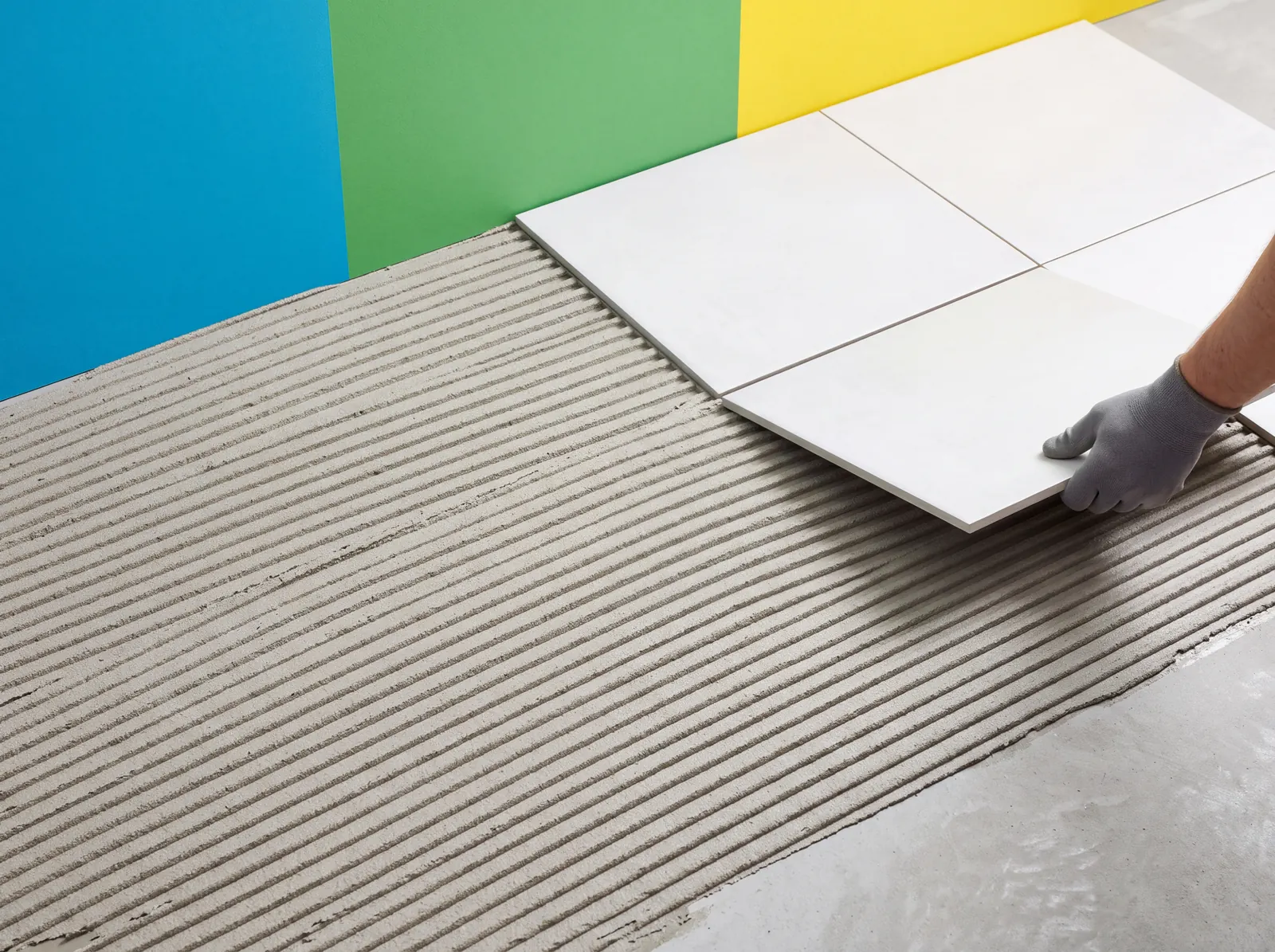
Most tiles that lift, crack or sound hollow were fixed with the wrong adhesive, too little of it, or no movement joint. These guides explain the adhesive classes printed on every bag, how much adhesive and grout a floor takes, which trowel suits which tile, and when an epoxy grout earns its place. The figures come from the manufacturers' technical data sheets, and every guide links to the product pages where those sheets can be downloaded and the quantities calculated.
Guides
Tiling6 min read
How much tile adhesive per square metre
How much tile adhesive per square metre: printed rates for four adhesives, m² per 25 kg bag, a worked 30 m² room and why the trowel changes the figure.
Read the guide
Tiling6 min read
Why floor tiles pop up, lift or sound hollow
Why tiles pop up, lift or sound hollow: a table of six causes, what to check on site, the fix, and how joints, coverage and curing time prevent it.
Read the guide
Tiling6 min read
Epoxy grout or cement grout: which goes where
Epoxy grout vs cement grout compared from Mapei data sheets: joint width, working time, cleaning, where each belongs, and the +30°C limit in Dar es Salaam heat.
Read the guide
Tiling6 min read
Tile adhesive or sand and cement: which to use
Tile adhesive vs cement: thick-bed sand and cement against thin-bed adhesive, why porcelain needs adhesive, and when a screed still comes first in Tanzania.
Read the guide
Tiling7 min read
Keraflex Maxi S1, Adesilex P7, Kerabond T or Mapeset: which Mapei tile adhesive
Mapeset, Kerabond T, Adesilex P7 and Keraflex Maxi S1 compared by class, consumption, pack and limits, from the data sheets, to pick the right tile adhesive.
Read the guide
Tiling8 min read
Mapei waiting times: when to tile, grout or walk on it
How long to wait before tiling, grouting or walking on Mapei products: membranes, adhesives, grouts, levelling and primers, with each printed condition.
Read the guide
The products behind these guides